HIV prevention has never been only about understanding how a virus is transmitted. It is also about creating communities where people have accurate information, feel comfortable asking questions, know how to access testing and prevention resources, and treat people living with HIV with dignity.
That makes HIV prevention education an important tool for addressing both health knowledge and stigma.
Stigma can thrive when HIV is surrounded by outdated information, fear, stereotypes, and silence. Education creates opportunities to replace those assumptions with accurate information and, importantly, a better understanding of the people whose lives are affected by HIV.
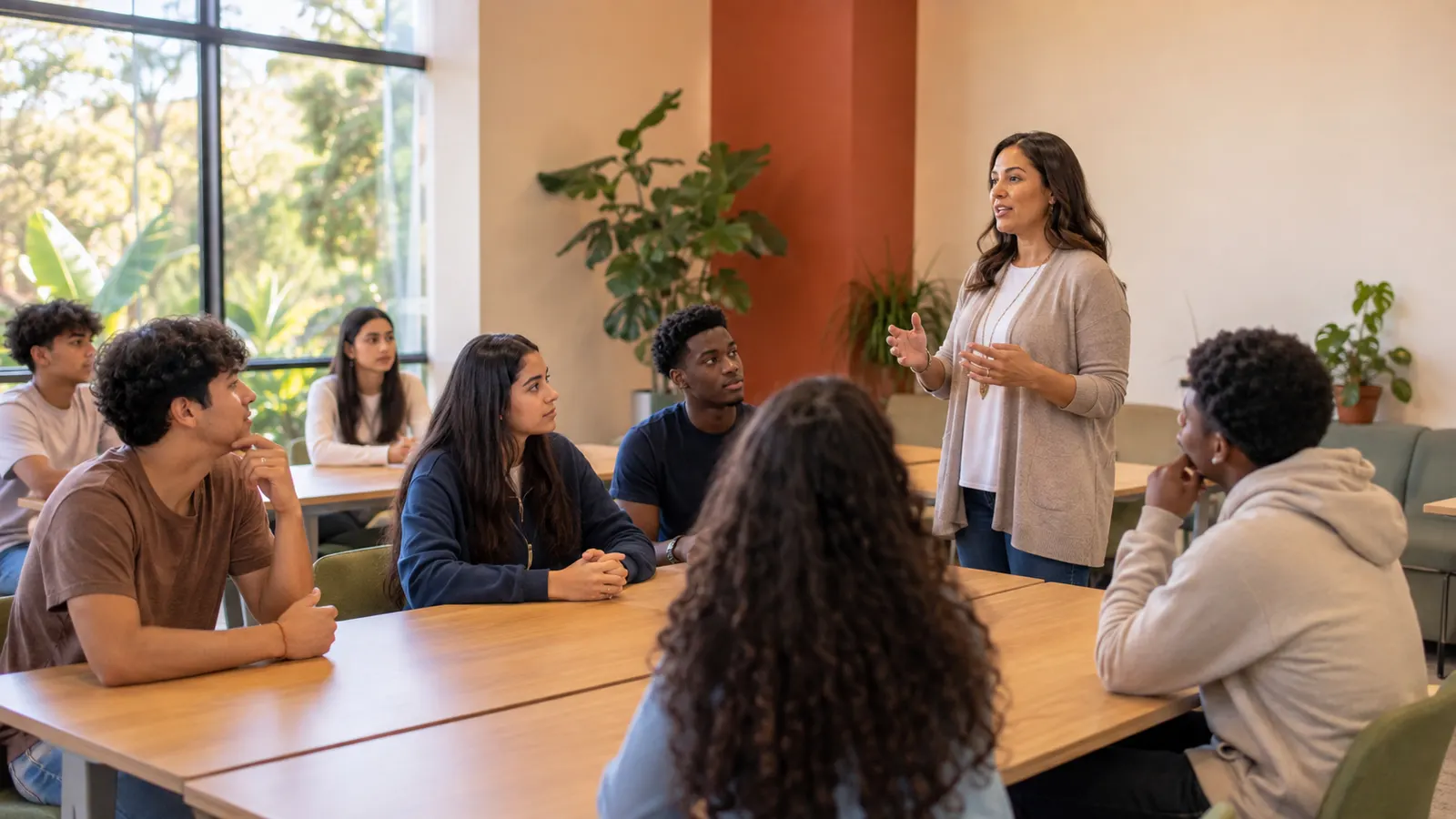
In Orange County, Shanti Orange County takes this approach directly into local high schools and colleges. Its free community education program combines sexual-health and prevention education with personal perspectives from Shanti Ambassadors living with HIV/AIDS, helping students understand both prevention and the human realities behind the subject.
Knowledge Can Challenge the Assumptions Behind HIV Stigma
People do not always recognize misinformation as misinformation.
Someone may have heard an inaccurate statement years ago and continued believing it. Others may have learned about HIV primarily through frightening stories, stereotypes, entertainment, social media, or jokes rather than reliable health education.
Those ideas influence behavior.
They can affect how someone reacts when a friend discloses an HIV diagnosis, how comfortable a person feels discussing sexual health, or whether someone worries about being judged for seeking testing.
Effective HIV prevention education provides a structured opportunity to replace assumptions with evidence-based information and respectful conversation.
Shanti OC's community education program is designed for Orange County high schools and colleges and aligns with the California Healthy Youth Act. Its two-part presentation combines discussion from a Sexual Health Educator with the perspective of a Shanti Ambassador living with HIV/AIDS.
That combination matters because facts can correct misinformation while personal experience can challenge stereotypes.
What Is HIV Stigma?
Stigma Turns a Health Condition Into a Social Judgment
HIV stigma refers broadly to negative attitudes, beliefs, assumptions, or discriminatory behaviors directed toward people living with HIV or people perceived to be at risk.
It can appear in obvious ways, such as insults or exclusion.
But stigma can also be subtle.
It may appear as avoiding someone because of incorrect beliefs about transmission, making assumptions about how someone acquired HIV, treating an HIV diagnosis as evidence of someone's character, or using language that reduces a person to their health condition.
These responses can have real consequences.
Shanti OC's historical HIV education materials identify isolation, discrimination, fear of testing, fear of obtaining medical treatment, and fear of disclosing HIV status among the potential consequences associated with stigma.
Stigma Can Persist Even When Medical Knowledge Advances
Public understanding does not always change as quickly as medical science.
Information learned decades ago can continue circulating between generations.
That is one reason ongoing education matters.
Students entering classrooms today may encounter HIV in a very different medical and social environment from the one experienced during the earliest years of the epidemic, but they can still inherit outdated beliefs.
Education provides an opportunity to update that understanding rather than allowing old assumptions to persist unchallenged.
Accurate Information Replaces Fear With Understanding
Misinformation Can Create Unnecessary Fear
Fear often grows when people do not understand how HIV transmission occurs.
When transmission is poorly understood, people may overestimate risks from ordinary social interaction or underestimate situations in which prevention actually matters.
Both problems are important.
Accurate education helps students distinguish realistic health considerations from misconceptions.
Instead of treating HIV as something mysterious, education places it within a broader discussion of sexual health, prevention, responsible decision-making, and community health.
Facts Give Students Something Better Than Rumors
Young people receive information from many sources.
Some are reliable. Others are not.
Social media posts, peer conversations, outdated websites, entertainment, and secondhand stories can all influence what students believe.
Formal HIV prevention education gives them an opportunity to encounter information in a setting designed for learning and questions.
Shanti OC specifically describes sexual education as important to informed health choices and STD/HIV prevention.
Putting a Human Face on HIV Changes the Conversation
Personal Stories Can Challenge Stereotypes
Statistics are useful, but numbers alone cannot communicate what someone's daily life actually feels like.
This is where Shanti OC's educational model adds another dimension.
Its presentations pair sexual-health education with Shanti Ambassadors who live with HIV/AIDS and share their experiences. Shanti describes these personal perspectives as a way to put a human face on HIV/AIDS and break down stigma and prejudice.
That interaction can challenge the idea of HIV as an abstract subject involving "other people."
Students instead encounter an individual with experiences, relationships, challenges, goals, and a life that cannot be reduced to a diagnosis.
Empathy Can Grow Alongside Knowledge
Knowledge answers questions such as how prevention works.
Personal perspective can address another question: What is it actually like to live with HIV?
Those are complementary forms of learning.
A student may understand a medical fact intellectually while still holding unconscious stereotypes about the people affected.
Hearing someone's lived experience can encourage students to examine those assumptions.
Education Can Make HIV Easier to Talk About
Silence Gives Misinformation Room to Grow
Subjects that people are embarrassed to discuss are particularly vulnerable to misinformation.
If students believe HIV, testing, or sexual health are inappropriate topics for conversation, they may avoid asking questions when they need reliable information.
Education can create a more appropriate vocabulary for those conversations.
Instead of jokes, euphemisms, or assumptions, students can learn to discuss health topics more directly and respectfully.
That matters beyond the classroom.
Young people may eventually need to communicate with healthcare professionals, partners, friends, or family members about sexual health.
Asking Questions Should Not Be Shameful
People sometimes avoid questions because they worry that asking will reveal something about them.
A student might wonder about HIV testing but fear classmates will assume they are sexually active or personally at risk.
A supportive educational environment can separate curiosity from judgment.
Questions become part of learning rather than evidence about someone's private life.
That shift can help normalize health literacy.
Prevention Education Can Help Normalize Testing
Testing Should Be Viewed as Healthcare
Stigma can influence how people perceive HIV testing.
If testing is associated with shame or assumptions about someone's behavior, people may hesitate to discuss it.
Education can help frame testing within routine health decision-making.
Knowing where resources exist is also important.
Shanti OC maintains a community resources directory that includes Orange County HIV/STD testing options as well as national HIV/AIDS information resources. The organization notes that the directory is not exhaustive and recommends confirming eligibility, hours, and services directly with providers.
Knowing Where to Go Removes Another Barrier
Awareness without access has limitations.
Someone can understand that testing matters but still not know where to find it.
Community education and resource awareness work together by answering both questions:
Why should I understand HIV prevention?
and
Where can I find credible help or information if I need it?
Making resources visible can reduce uncertainty when someone decides to take action.
HIV Education Can Challenge Harmful Stereotypes
HIV Does Not Define a Person
Stigma often reduces people to labels.
Someone becomes "an HIV-positive person" before they are recognized as a colleague, parent, partner, student, neighbor, friend, or community member.
Person-centered education pushes against that reduction.
A diagnosis is part of someone's health history. It is not a complete description of their identity or worth.
This distinction may sound simple, but it influences language and behavior.
Language Shapes Attitudes
Words can reinforce stigma even when harm is not intentional.
Educational programs can help students become more aware of how they speak about HIV, sexual health, and people living with health conditions.
Respectful language communicates that health information does not determine someone's value.
It also creates an environment where disclosure, questions, and health conversations are less likely to be met with immediate judgment.
Why Schools and Colleges Are Important Settings
Young People Are Building Lifelong Health Knowledge
High school and college are periods when many people begin taking greater responsibility for personal healthcare decisions.
The information learned during these years can influence later attitudes toward prevention, testing, relationships, and healthcare.
That makes educational settings particularly valuable.
Students can learn before misinformation becomes deeply entrenched.
Shanti OC provides its community education presentations free to Orange County high schools and colleges and can tailor sessions to the students and time available, from a class period to a larger assembly.
Education Can Reach Beyond the Classroom
Students do not keep everything they learn at school inside the classroom.
Information can influence conversations with friends, partners, siblings, parents, and other community members.
That creates a broader ripple effect.
When more people understand HIV accurately, misinformation has fewer opportunities to pass unquestioned from person to person.
Reducing Stigma Can Support People Living With HIV
Stigma Can Affect More Than Social Comfort
Being judged because of a health condition can influence someone's sense of safety and belonging.
It may affect whether they feel comfortable discussing their diagnosis, seeking support, or talking openly about challenges.
Shanti OC's HIV-focused work recognizes that people living with HIV may need support beyond medical treatment alone. The organization currently provides HIV case management alongside counseling and an HIV therapy group, reflecting the broader social and emotional dimensions of living with HIV.
Reducing stigma cannot eliminate every challenge, but it can help create a community environment in which people are treated with greater dignity.
Community Attitudes Matter
Healthcare happens within a larger social environment.
Someone may receive excellent clinical care while still encountering misunderstanding elsewhere.
That is why community-level education matters.
Medical advances alone cannot correct prejudice.
People need opportunities to learn, question assumptions, hear lived experiences, and understand why respectful treatment matters.
Prevention and Compassion Are Not Opposing Goals
Education Can Be Practical Without Becoming Judgmental
Prevention messages are most useful when they provide clear health information without treating people as moral examples.
Shame is not a substitute for education.
A respectful approach allows educators to discuss prevention directly while recognizing that people come from different backgrounds and circumstances.
That creates space for learning rather than defensiveness.
Respect Makes Health Conversations More Productive
Imagine two approaches.
One relies on fear, stereotypes, and warnings about "bad choices."
The other explains health information clearly, answers questions, discusses prevention, acknowledges real experiences, and treats people living with HIV with dignity.
The second approach creates more room for understanding.
It allows prevention education to communicate responsibility without reinforcing stigma against the very people it is intended to support.
HIV Prevention Education Can Improve Health Literacy
Students Learn How to Evaluate Information
Good health education does more than provide facts to memorize.
It can teach students to ask:
- Where did this information come from?
- Is the source credible?
- Is this claim current?
- Am I confusing a stereotype with evidence?
- Where can I verify what I heard?
- Who can I ask for professional guidance?
Those skills become increasingly important in an online environment where health misinformation can spread quickly.
Reliable Sources Matter
Students should know where credible information can be found after a presentation ends.
Community organizations, healthcare providers, public-health agencies, and reputable national health resources can all play roles.
Shanti OC's resource directory, for example, links community members to local testing providers and recognized HIV/AIDS information sources.
Teaching people where to verify information makes education more sustainable than expecting them to remember every detail from one presentation.
Why Lived Experience Matters Alongside Clinical Information
Data Explains HIV; Stories Explain Its Human Impact
Health education can explain transmission, prevention, testing, and other practical topics.
Lived experience adds context.
Someone living with HIV can speak about navigating relationships, healthcare, disclosure, misconceptions, and everyday life from a perspective that a textbook cannot reproduce.
That does not replace evidence-based health education.
It complements it.
Direct Exposure Can Make Stereotypes Harder to Maintain
Prejudice is easier to maintain when the people being stereotyped remain abstract.
Meeting or hearing directly from someone whose experience contradicts those assumptions can encourage reflection.
This is a central feature of Shanti OC's program.
The organization's Ambassadors share personal experiences specifically to help students understand daily life with HIV/AIDS and challenge stigma and prejudice.
How Educators Can Create a More Supportive Conversation
Establish Respect Before Discussing Sensitive Topics
Students are more likely to participate when expectations are clear.
Conversations about sexual health and HIV should discourage ridicule, personal speculation, and discriminatory language.
Students should not feel pressured to disclose personal experiences.
The educational goal is understanding.
Creating that boundary allows difficult or sensitive questions to be explored without turning classmates into examples.
Correct Misinformation Without Shaming the Person
Someone can repeat inaccurate information without intending harm.
Responding with humiliation may simply make the person less willing to ask questions in the future.
A better educational response is to identify the misconception, explain what current reliable information supports, and show where that information can be verified.
Correct the idea rather than attacking the individual.
That approach models the same respectful behavior education is trying to encourage.
What Orange County Communities Can Do Beyond the Classroom
Keep Accurate Information Accessible
One presentation cannot eliminate decades of stigma.
Community organizations, schools, healthcare providers, families, and individuals all influence the information environment.
Reliable resources should remain visible and accessible.
Schools can continue incorporating accurate sexual-health education. Community organizations can maintain referral resources. Healthcare professionals can encourage questions without judgment.
Individuals can also stop misinformation when they encounter it.
Support People Without Making Assumptions
If someone discloses that they are living with HIV, listening can be more valuable than immediately giving advice.
Do not assume how they acquired HIV.
Do not disclose their health information to others.
Do not reduce their identity to their diagnosis.
For people wanting to better understand the emotional dimensions of stigma, Shanti OC's discussion of HIV stigma and mental health provides additional context on why supportive, informed responses matter.
Why Local HIV Prevention Education Still Matters
Community Health Requires Ongoing Education
The fact that HIV has been discussed publicly for decades does not mean everyone has accurate or current knowledge.
New generations continuously enter schools and colleges.
Misinformation continues circulating.
Stigma can persist even when treatment and prevention knowledge advance.
That makes continued HIV prevention education relevant.
Orange County Has an Existing Community Resource
Shanti Orange County has served the community since 1987 and currently combines mental health counseling, HIV care, prevention education, psychological assessment, and community support within its broader mission.
Its educational model is particularly relevant to stigma because it deliberately combines health information with human experience.
Students are not only taught about HIV.
They are encouraged to understand the people affected by it.
That distinction is fundamental to reducing stigma.